Ask any project manager what they dread most and a lot of them will say the same thing: timesheets. Not because tracking time is hard, but because nobody does it in real time. It gets pieced together on a Friday afternoon from half-remembered calendar invites, and by the time it lands on someone's desk, it's basically fiction. We built Taskable to get rid of that whole routine.
Instead of making people open another tool, log in, and click through a form, Taskable just meets them where they're already working — a quick voice note on WhatsApp, a message in Teams, or a row that syncs directly into your ERP. Recording time becomes part of the day instead of something bolted on at the end of it.
It was never about discipline
We talked to a lot of teams while building this, and they kept describing the same problem. The more a system asks people to do up front, the less consistently they actually do it. And the less reliable the data, the more meetings get called to sort it out. The real bottleneck was never people being lazy about logging hours — it was the small, annoying gap between finishing the work and writing it down.
If logging an hour takes longer than the coffee break it interrupts, most people just won't bother.
So instead of asking "how do we get people to fill out the form properly," we asked a different question: what if there was no form?
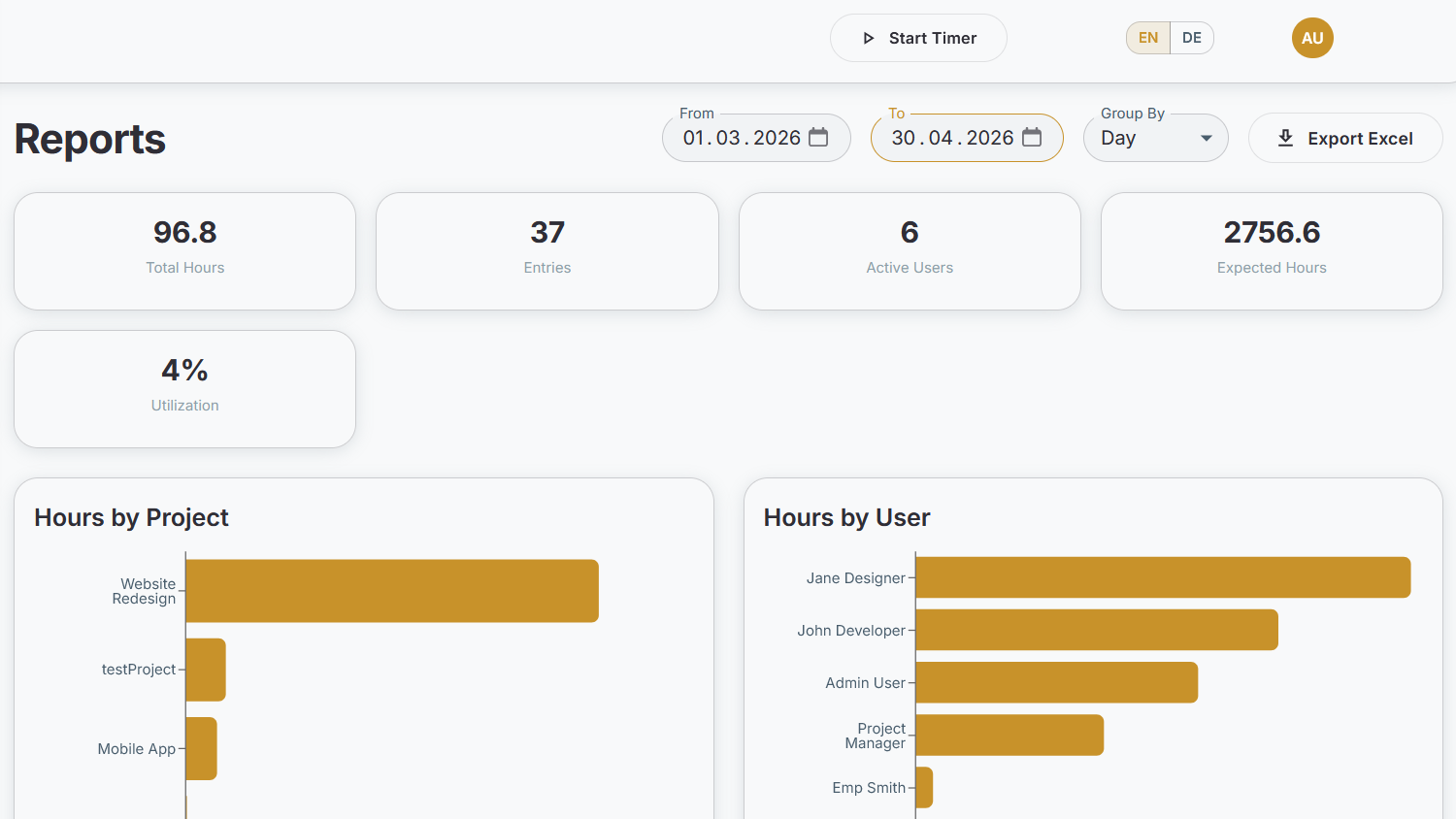
This is the view most managers actually care about — a live, accurate picture of where time is going. Nobody had to sit down and build it. It just falls out of the fact that the underlying entries were easy to make in the first place.
Logging time the way people already talk
The biggest change we made was letting people log time the way they'd casually tell a coworker what they'd been doing. Send "spent the morning on the Meyer onboarding" and Taskable turns that into a proper entry, matched to the right project, ready for a quick confirmation.
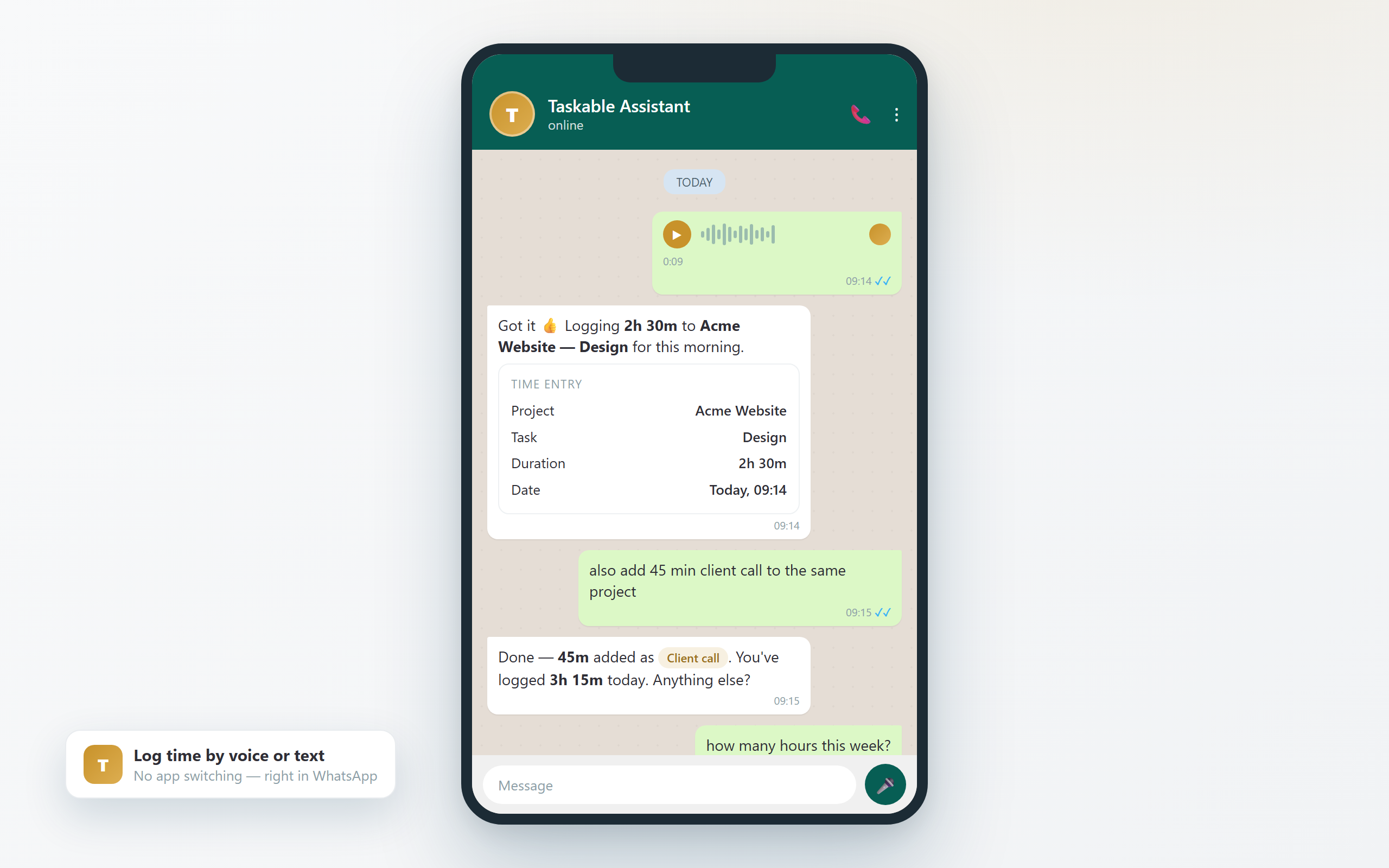
No new login. Nothing to install. No onboarding session to sit through. If someone on your team can send a WhatsApp message, they can keep their timesheet accurate — whether they type it out or just talk into their phone on the way to a meeting.
A few things fall out of this naturally
- Entries land the same day, while the details are still fresh, so the data holds up instead of being reconstructed later.
- Adoption isn't a project of its own, because there's no new habit for anyone to build.
- Managers stop chasing people down, because the numbers stay current without anyone forcing them to.
Connecting to the systems you already use
Capturing the time is only half the job. The other half is getting those hours into the system your business already trusts — your ERP. Taskable connects directly, and can pull in your historical data too, so you're not starting from zero.
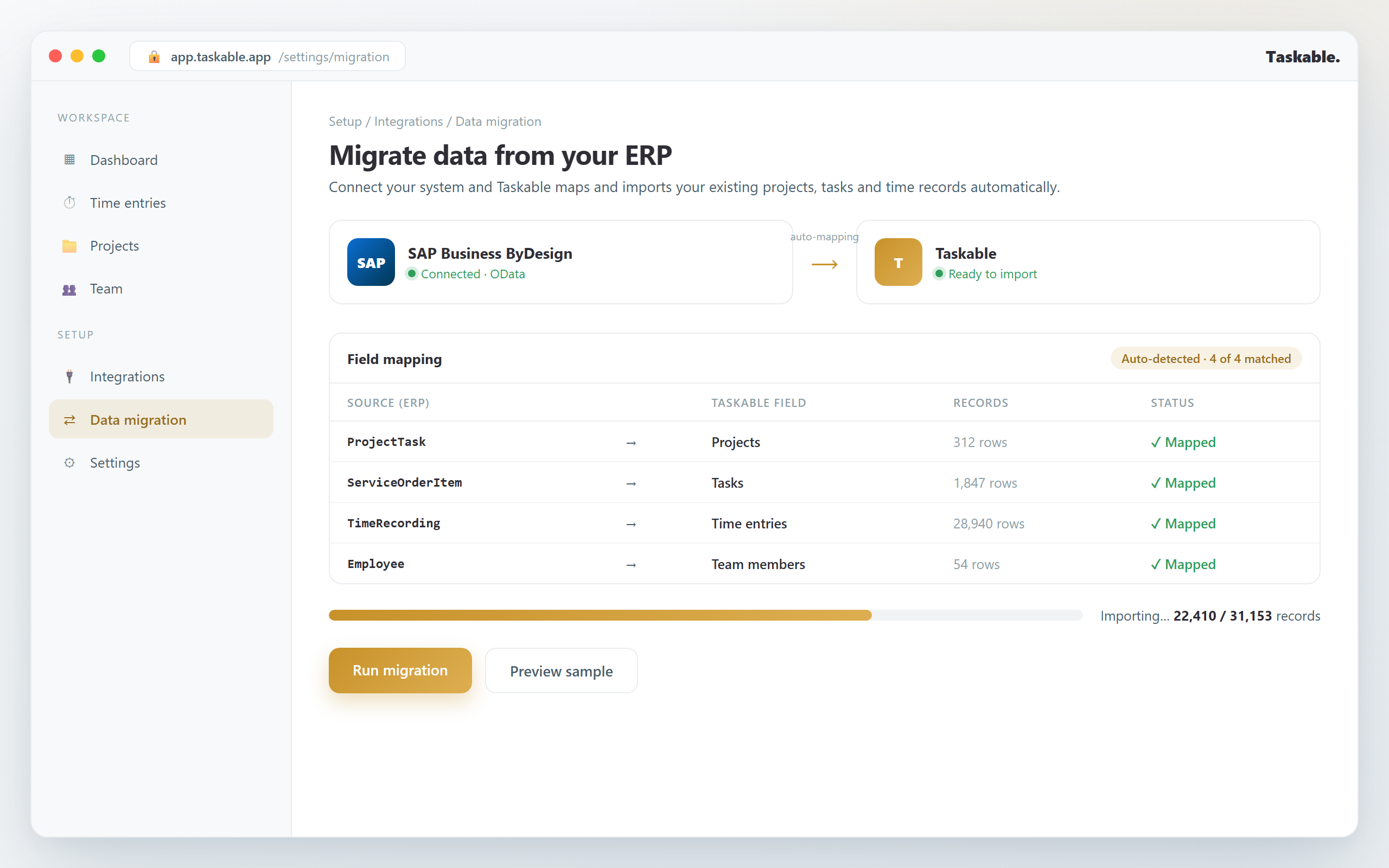
There's no fragile middleware to maintain and no risky one-time export to worry about. Both systems stay in sync, so finance, project management, and delivery are all looking at the same numbers.
What's next
This is the first post on the Taskable blog. We'll be writing about how we're building the product, what's going on behind the scenes with the assistant, and practical stuff for teams trying to get a handle on their time tracking. If getting a few hours back each week sounds useful, get in touch — happy to show you around.
Welcome aboard.