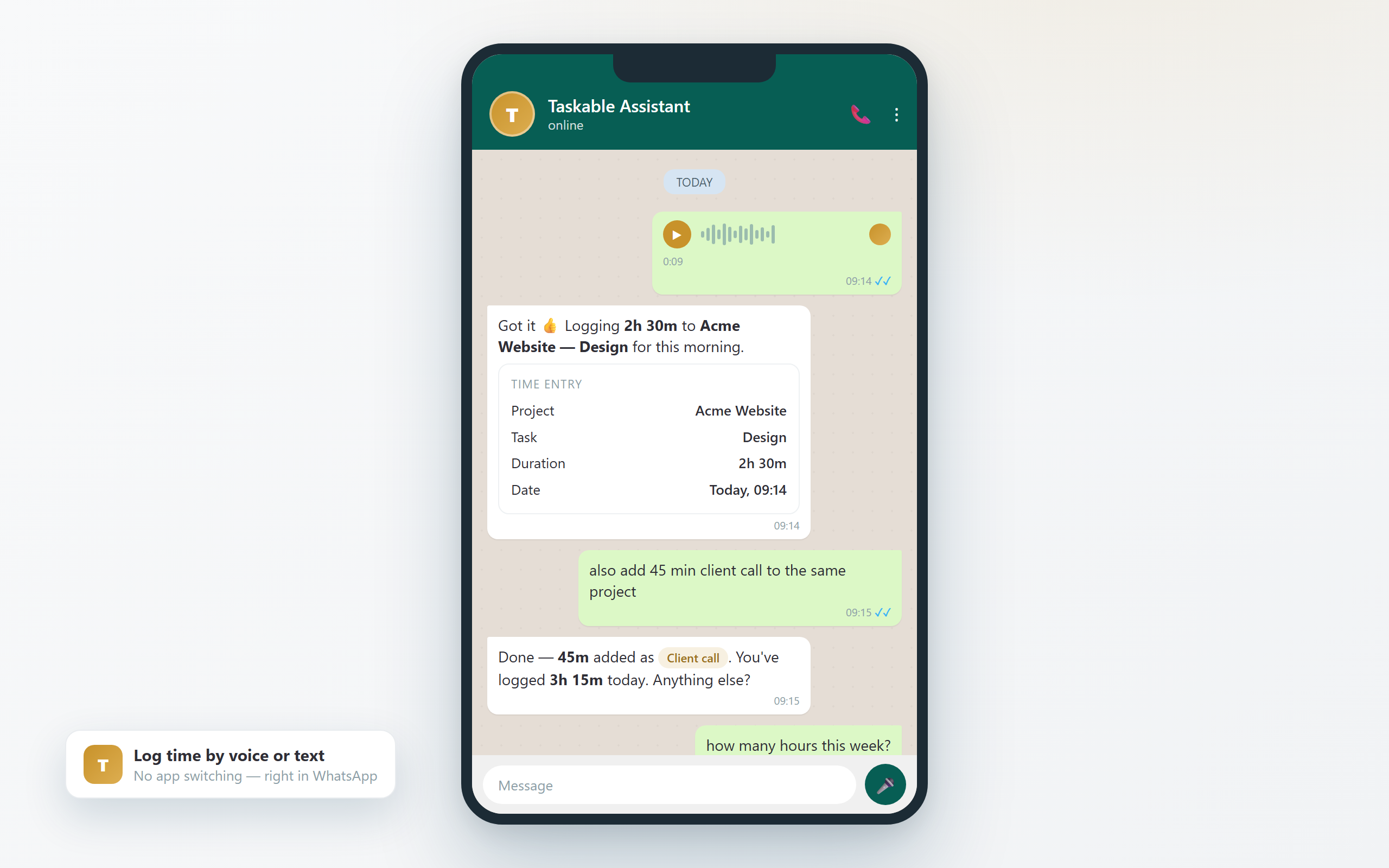
Time tracking fails at the moment of remembering, not at the moment of typing. So we moved reporting to where you already are: WhatsApp, Teams, and your own voice.
Friday, 17:47. You're in the lift, done for the week, and you remember: the timesheet. You know roughly what you did — Monday feels like last month, but roughly. By the time you're at a desk again, it's Monday morning and roughly has become guesswork.
Most timesheets aren't late because people are lazy. They're late because the form lives somewhere you aren't.
The real problem is the moment, not the form
Every time-tracking tool asks you to come to it: open the app, find the project, pick the task, fill the grid. That works at 9:00 at a desk. It fails at 17:47 in a lift, in the car park, on the way to the station — which is exactly when the work is freshest in your head.
Memory decays by the hour. An entry written on Friday is a record; the same entry written on Monday is an estimate; by month-end it's fiction. And fiction is expensive: invoices wait on missing hours, project margins are read from numbers nobody trusts, and managers spend their afternoons chasing people instead of managing projects.
The fix isn't more discipline. It's a shorter distance between doing the work and logging it.
Reporting as a message
With Taskable, logging time is a chat message — or a voice note — in WhatsApp or Teams. The tools you already have open all day.
You say: "Two and a half hours of homepage mockups for the Website Relaunch." The system does the boring part: matches the project, finds the task, sets the date, marks it billable, files it. Three seconds of talking replace three screens of clicking.
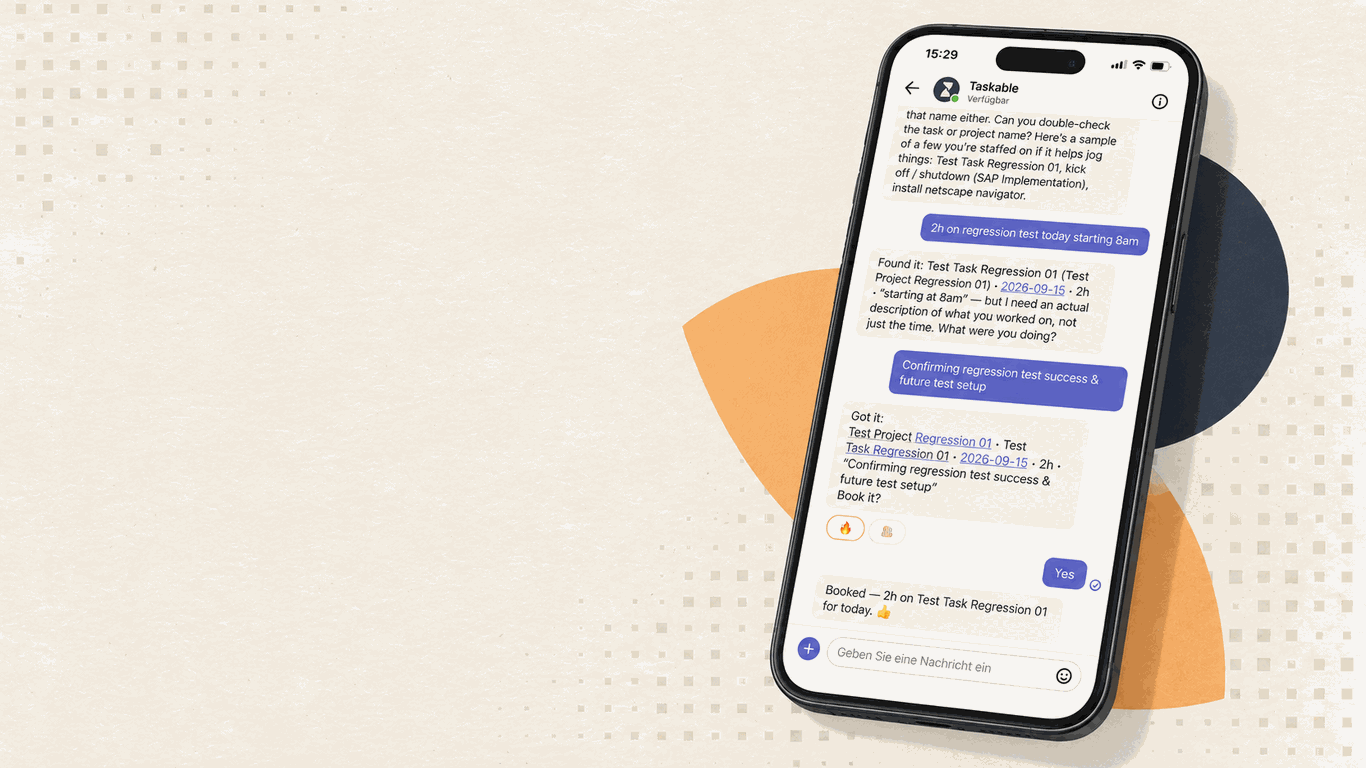
And when something's missing, the system asks — a quick follow-up in the same chat, while you still remember. Reporting expectations live in Taskable, not in your manager's head, so the chasing is done by the tool. Nobody gets a "gentle reminder" from their boss about a timesheet ever again.
That's the whole idea: the timesheet comes to you, instead of the other way around.
Trust, not surveillance
Let's be direct about what this is not. Taskable is not a monitoring system. No passive tracking, no screenshots, no keystroke logging, no "activity scores". People report their work; the system organises it.
We think that distinction is the whole ballgame. A tool that watches people buys compliance and gets resentment. A tool that trusts people — and makes reporting effortless — gets real data. Replace the feeling of being watched with the feeling of being trusted, and the entries take care of themselves.
The honest part
Chat isn't the right answer for every moment. A detailed weekly review is still better in the app, and some roles will prefer the grid. That's fine — voice and chat are two ways to log time among several, not a religion. Each person picks what fits the way they work; the data lands in the same place either way.
What actually changes
Same-day entries instead of month-end fiction. Complete data without anyone chasing it. Invoices that go out on time because the hours are already there. And a Friday at 17:47 where the timesheet is already done — because it happened in the lift, in a message, before you even thought about it.
Logging time should be as natural as brushing your teeth. You shouldn't have to open anything to do it.
Start a 14-day trial and send your first entry from WhatsApp today — the week will be over before the form would have loaded.